Seat belts and airbags after a crash deserve as much attention as dents, paint damage, and broken glass. These parts work in a split second, often without leaving obvious evidence of what happened inside them. A professional inspection helps make sure your vehicle’s restraint system is ready to protect you again.
The Safety Gear You Cannot Always See
After an accident, most people look at the bumper, hood, doors, or windshield first. That makes sense because visible damage tells part of the story. Seat belts and airbags after a crash tell another story, one that happens inside retractors, sensors, modules, and hidden wiring.
Your vehicle uses a restraint system to manage the force of a collision. The seat belt holds the occupant in place while airbags deploy to cushion the impact. These components are designed to work together, which means damage to one part can affect how the rest of the system responds.
A repair can look great on the outside while the restraint system still needs attention. That is why a post-crash inspection should include the systems that protect people inside the vehicle. It is easy to focus on the scratched bumper, but safety equipment should never become an afterthought.
How Seat Belts React During Impact
Seat belts do more than keep a person from moving forward during a crash. In many modern vehicles, the belt system includes a retractor and a pretensioner. The retractor allows the belt to move during normal driving, then locks during sudden braking or impact.
A pretensioner can tighten the belt during a crash to remove slack around the occupant. That helps position the driver or passenger correctly before the airbag deploys. Once the pretensioner activates, it may need replacement according to the manufacturer’s repair procedure.
Seat belts and airbags after a crash can experience hidden stress that a quick look will not reveal. Belt webbing may stretch, retractors may lock incorrectly, and internal components may be damaged even if the belt appears normal. A seat belt that does not extend, retract, latch, or lock properly needs professional attention.
What Airbags Do In A Collision
Airbags deploy in a fraction of a second after crash sensors detect an impact that meets deployment criteria. The restraint control module uses information from sensors around the vehicle to decide if and where airbags should deploy. Front airbags, side airbags, and curtain airbags may respond differently based on the direction and severity of the collision.
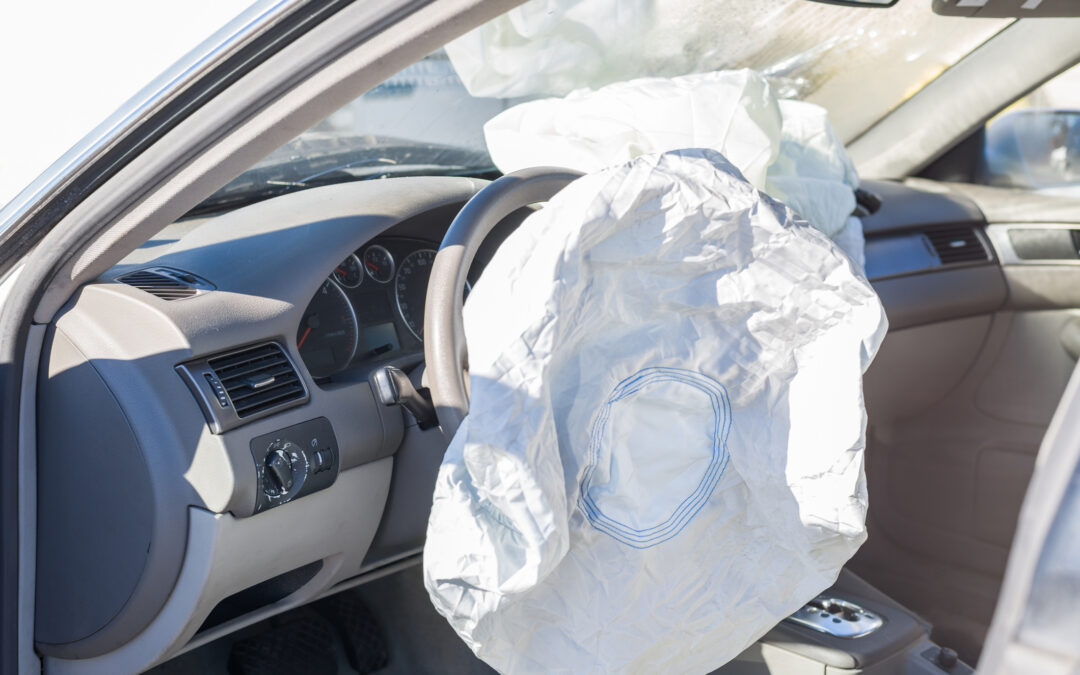
When an airbag deploys, it is not a part that can be reset with a quick repair. The deployed airbag module needs replacement, and related components may require inspection or replacement under the manufacturer’s repair procedures. This can include impact sensors, wiring, trim pieces, and the restraint control module.
Seat belts and airbags after a crash are closely connected. The airbag is designed to work with a properly worn and functioning seat belt, not as a substitute for one. Both systems need to be evaluated together after an accident, especially if anyone occupied the vehicle during the impact.
Why Hidden Damage Is A Serious Concern
A damaged bumper tells you that something happened. A damaged pretensioner or retractor may not be as obvious. These pieces are housed within the vehicle, often behind trim panels or inside the seat belt mechanism, where a visual check cannot tell the full story.
The belt webbing can also be affected by the force of an impact. Stretching, small tears, or damage to stitching may be hard to spot without a close inspection. A belt can look acceptable, yet fail to perform correctly during the next emergency.
This is why seat belts and airbags after a crash deserve a careful repair plan. The goal is not to make the warning lights disappear. The goal is to restore the restraint system using the right parts and the manufacturer’s procedures so it can do its job when it matters.
Pre-Repair Scans Tell Us What Happened
A pre-repair scan gives us a starting record of what the vehicle’s computers captured during the accident. The restraint control module may store crash-related fault codes, deployment events, communication issues, or faults tied to sensors and pretensioners. These codes can remain even if the dashboard warning comes and goes.
For seat belts and airbags after a crash, a scan helps us identify systems that need inspection before repairs begin. It can point to issues that are not visible from the cabin or exterior. That information helps us build a repair plan based on what the car recorded, rather than making assumptions from surface damage.
A pre-scan also separates prior issues from new collision-related faults. The record helps document the condition of the vehicle before parts are removed. This matters for repair accuracy and gives everyone a better picture of what the crash affected.
Post-Repair Scans Confirm The Work
After the necessary repairs are complete, a post-repair scan checks the restraint system again. It confirms that resolved codes are no longer active and that the modules can communicate as designed. If a code remains, the repair is not complete, and we know more diagnosis is needed.
Seat belts and airbags after a crash need this kind of verification because safety systems should not be left to guesswork. A clean-looking interior does not confirm that a retractor, pretensioner, sensor, or control module is working properly. The post-scan provides a final electronic check before the vehicle returns to the road.
This process also supports repair documentation. It shows that the vehicle was scanned before and after repairs, which helps demonstrate that the restraint system received the attention it needed. When a future owner or technician reviews the work, that documentation can be valuable.
OEM Parts Protect Occupants
Original manufacturer parts are essential when a repair involves occupant restraint equipment. OEM seat belts, pretensioners, airbags, sensors, and modules are designed to work together within the exact specifications of that vehicle. They are not areas where a repair should rely on close-enough substitutes.
The fit, timing, wiring connections, and software compatibility all matter. A part that resembles the original may not communicate correctly with the restraint control module. It may also fail to match the original performance requirements during an impact.
Seat belts and airbags after a crash are tied directly to the safety of drivers and passengers. We follow manufacturer procedures and use OEM parts when repairs involve the restraint system. That approach helps return the vehicle to the protective design it had before the accident.
Common Signs That Need Inspection
An airbag warning light is the most obvious signal that the restraint system needs attention. Still, some issues show up in smaller ways. A seat belt that sticks, retracts slowly, fails to click smoothly, or feels unusually loose should be inspected after a collision.
You may also see damaged seat belt webbing, broken trim near the belt anchor, or an airbag cover that has deployed. If the crash involved a seat occupant, even mild-looking impact damage can warrant a closer look at the restraint system. Seat belts and airbags after a crash are built for emergencies, so it is worth making sure they are ready for another one.
Here are common reasons to schedule an inspection:
- The airbag warning light remains on after the accident
- An airbag deployed during the collision
- A seat belt will not retract or lock properly
- The belt webbing shows fraying, stretching, or damaged stitching
- A person was wearing the belt during the impact
How We Approach Restraint-System Repairs
At CA Collision, we look past the visible exterior damage after an accident. When seat belts and airbags after a crash may be affected, we include restraint-system diagnostics as part of the repair planning. We use pre-repair scans to understand what the vehicle recorded and post-repair scans to verify the final repair.
We follow manufacturer procedures and use original manufacturer parts for restraint-system work. These parts have a direct role in protecting the people inside your vehicle, so we do not treat them as a cosmetic detail. Our approach is built around putting the car back together with safety in mind.
You can learn more about our collision repair services, explore the before and after gallery, and read customer testimonials from people who have trusted us after an accident.
FAQs
1. Do seat belts need inspection after every crash?
A professional inspection is a smart step after any collision, especially when an occupant was wearing the belt. The impact can affect the retractor, pretensioner, latch, or webbing in ways that are not easy to see.
2. Can a seat belt look normal but still be damaged?
Yes. Internal parts inside the retractor or pretensioner can be affected without visible damage to the belt. Stretching, tiny tears, and other webbing damage may also be hard to identify without a close inspection.
3. Do airbags need to be replaced after they deploy?
Deployed airbags require replacement according to manufacturer procedures. Related parts, including sensors, modules, wiring, and trim, may also need inspection or replacement based on the vehicle and crash details.
4. Why is the airbag warning light still on after an accident?
The warning light can indicate a stored fault in the restraint system. It may relate to a deployed airbag, a pretensioner, a sensor, wiring, or a control module. A diagnostic scan is needed to identify the exact cause.
5. Why are OEM parts important for restraint-system repairs?
OEM parts are made to meet the vehicle manufacturer’s specifications for fit, wiring, software communication, and performance. That helps the seat belts, airbags, sensors, and control module work together as designed in a future collision.
6. What do pre- and post-repair scans check?
A pre-scan identifies fault codes and crash-related issues recorded by the vehicle before repair work begins. A post-scan checks that resolved faults are gone and related systems communicate correctly once repairs are complete.
Put Safety Back In The Driver’s Seat
After a crash, the systems you cannot see deserve the same attention as body damage. Call CA Collision at 925-484-0111 or contact our team to discuss a careful inspection and repair plan.