Modern vehicles rely on far more than strong metal and good brakes to keep you safe. Cameras, radar units, and sensors all work together behind the scenes to help you avoid trouble in the first place. When a crash happens, those systems can be knocked out of sync even if the damage looks small. That is where ADAS calibration and collision repair come together and where the details really matter.
Why ADAS Matters In Everyday Driving
If your car has lane keeping, blind spot monitoring, or automatic emergency braking, you are already depending on ADAS every time you drive. These features use forward facing cameras, radar sensors in the grille or bumper, and small modules hidden behind trim pieces to watch the road and react faster than any human could. A quick glance at your dashboard will not tell you how much work these systems do mile after mile.
Once a vehicle is involved in a crash, even a low speed one, the relationship between those sensors and the road can change. A camera might shift a few millimeters or a radar sensor might not point in the same direction anymore. From the outside, everything can look tidy, but without proper ADAS calibration and collision repair, the systems that are supposed to help you can be confused, delayed, or completely silent when you need them most.
How Collisions Knock Advanced Systems Out Of Sync
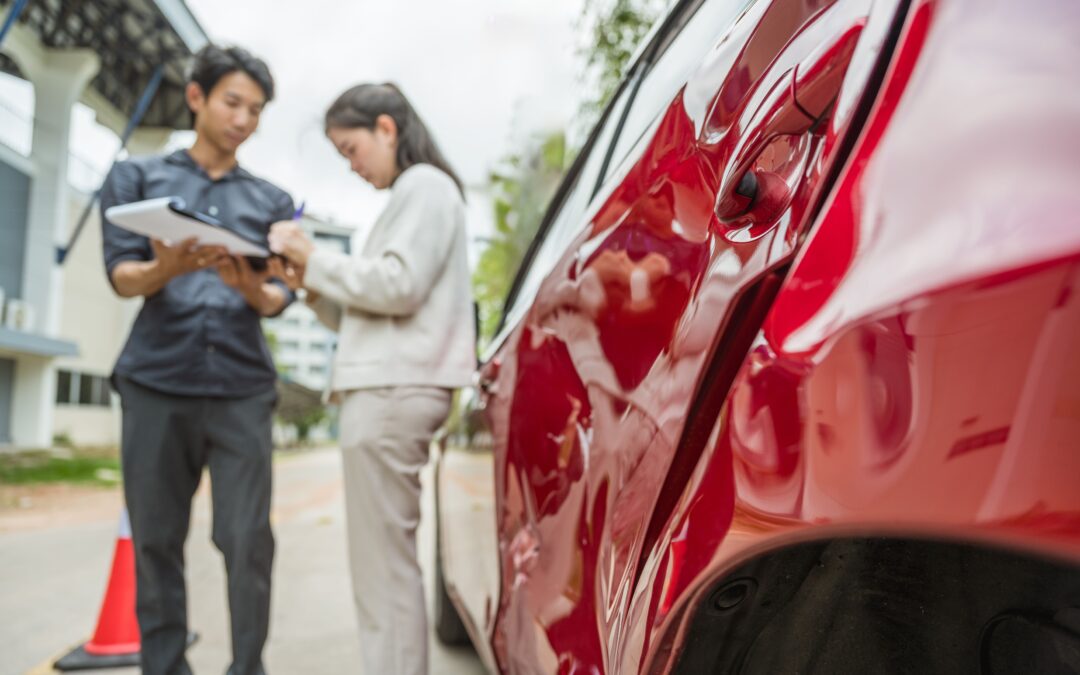
It does not take a dramatic wreck to cause trouble for ADAS. A small bump to the front bumper can nudge radar brackets, while a side swipe can disturb blind spot sensors in the rear quarter panel. Even repairing or replacing a grille, emblem, or mirror housing can bring the alignment of sensors into question. The crash may have looked like an inconvenience, but your safety tech might have experienced a serious shock.
This is where ADAS calibration and collision repair become a package deal rather than separate ideas. When structural parts, bumpers, glass, or suspension components are repaired or replaced, the shop needs to check how that work affected the cameras and sensors. If those devices are not recalibrated afterward, your car could be driving around with a safety net that looks intact but has holes you cannot see.
The Role Of Pre Repair Scans In ADAS Calibration
Before any panel is pulled or part is ordered, a pre repair scan gives us a snapshot of your car’s electronic health. The scan tool communicates with control modules that manage everything from airbags to adaptive cruise control. It reads stored and active fault codes that may not show on the dashboard, especially when systems quietly shut down after sensing a problem..
From the perspective of ADAS calibration and collision repair, this early scan shows us which systems were upset by the impact and where to focus our attention. If we see codes in the camera module or radar system, we know those need extra care during planning and repair. It also lets us document the vehicle’s condition for you and for the insurer, so everyone understands what changed when the crash occurred.
Why OEM Parts Are So Important For ADAS
The parts used during repairs play a huge role in how ADAS performs afterward. Original equipment bumpers, brackets, emblems, and windshields are designed with specific thickness, curvature, and mounting points. Those tiny details help radar waves travel correctly and allow cameras to “see” the road with the clarity the engineers intended.
If ADAS calibration and collision repair rely on parts that are not built to those same specifications, small mismatches can create big headaches. A radar unit might sit slightly off center, or a bumper skin might have different material properties that change how signals pass through it. With windshields, the wrong glass can distort the view of a forward facing camera even if it looks fine to your naked eye. We have seen how these issues can trigger repeating fault codes or worse, systems that appear fine until a real emergency.
Windshield Replacement In The ADAS Era
Windshields used to be a straightforward piece of glass, but in vehicles with ADAS they are part of a much bigger picture. Many modern cars have cameras and rain or light sensors mounted at the top of the glass. That equipment feeds information to lane keeping and collision warning systems that constantly track lane lines, vehicles ahead, and lighting conditions.
When a windshield is replaced, ADAS calibration and collision repair have to meet in the middle. Installing OEM glass that matches factory standards is a big part of the equation, but the job is not finished until the camera is recalibrated using special targets and procedures. Skipping that step leaves you with a nice, clean windshield and a camera that may misjudge where the lane actually is, which is not a trade anyone really wants when driving at highway speeds.
Static And Dynamic ADAS Calibration
Not every calibration is the same. Some vehicles require static calibration, which takes place inside the shop with specialized targets set up at precise distances and angles around the car. Technicians follow detailed instructions for measurements, lighting, and even floor level to make sure sensors can “learn” their surroundings as intended. This process often applies to cameras mounted behind the windshield or in grilles.
Other vehicles call for dynamic calibration, which means the car has to be driven on specific types of roads at certain speeds while the scan tool communicates with the system. During this process, the vehicle collects real world data so the sensors can adjust to lane markings, traffic patterns, and surroundings. ADAS calibration and collision repair often involve a mix of both methods, depending on the make and model, so the shop must be equipped and trained to handle each one properly.
The Safety Risks Of Skipping ADAS Calibration
Skipping ADAS calibration might not show any immediate symptoms. The car starts, drives, and stops, and there might not be a single warning light staring back at you from the dashboard. That quiet can feel reassuring, but it is not proof that everything is working behind the scenes. The real test comes during sudden braking, a tight lane change, or an unexpected obstacle.
When ADAS calibration and collision repair are not handled together, you can end up with a vehicle that looks perfect but reacts poorly in those critical seconds. Lane keep assist might tug the wheel at the wrong time or fail to react at all. Automatic emergency braking might not sense a car ahead quickly enough. That is why we view calibration as part of safety, not as a fancy add on that can be skipped to save a bit of time.
How We Approach ADAS Calibration And Collision Repair
At CA Collision, we treat ADAS calibration and collision repair as parts of one continuous process. From the moment a vehicle arrives, we scan it, inspect the damage, and check manufacturer repair information to see what systems are involved. If the work touches areas with cameras, radar, or sensors, we plan for calibration from the start rather than trying to bolt it on at the end.
We also place strong emphasis on using OEM parts in critical areas so that our calibrations line up with the standards your vehicle was built around. Our team invests in training and equipment because this technology changes quickly and we want to keep pace with the vehicles our customers drive. If you want a sense of how seriously we take that responsibility, you can check out the shop’s before and after gallery and imagine the electronics behind those repaired panels as well.
Real Examples Of ADAS Issues After Crashes
A common example involves a vehicle that comes in after a front end collision where the bumper and grille are damaged. The pre repair scan shows faults in the adaptive cruise control module and front radar sensor. After structural repairs and part replacement, we perform static calibration in the shop using targets and a careful measurement setup. Without that calibration, the vehicle might misjudge the distance to cars ahead, which can turn adaptive cruise control from a comfort feature into a source of risk.
Another case is a car that had its side mirror and quarter panel repaired after a parking lot scrape. The owner reports that the blind spot warning has been inconsistent since the work. During our evaluation, we see issues in the sensor module and find that the original mounting specs were not followed. ADAS calibration and collision repair, done correctly this time, straighten out both the cosmetic damage and the blind spot system so the driver can trust those little warning icons again.
Building Confidence Through Communication And Proof
Most drivers do not want to become experts in calibration charts and scan reports, and that is completely fair. What they do want is confidence that their car will protect them and their families after a repair. This is where good communication and documentation come in. Scan results before and after repairs, along with calibration records, help show that ADAS calibration and collision repair were completed as part of a thorough process rather than as an afterthought.
If you are wondering how that approach feels from a customer’s point of view, you can read through some of the shop’s testimonials to hear those experiences in their own words. For a closer look at the full range of work beyond ADAS, the collision repair services page explains the broader repair process in more detail. Together, those resources paint a picture of a shop that treats technology and safety with the same care as fit and finish.
Take The Safe Road Forward
If your vehicle has been in a crash, no matter how small it seemed at the time, it deserves more than a quick patch up. Reach out to CA Collision at 925-484-0111 so we can guide you through ADAS calibration and collision repair, answer your questions in plain language, and get your car back to doing what it was built to do. You can also contact us online through the shop’s contact page whenever it is convenient for you.