
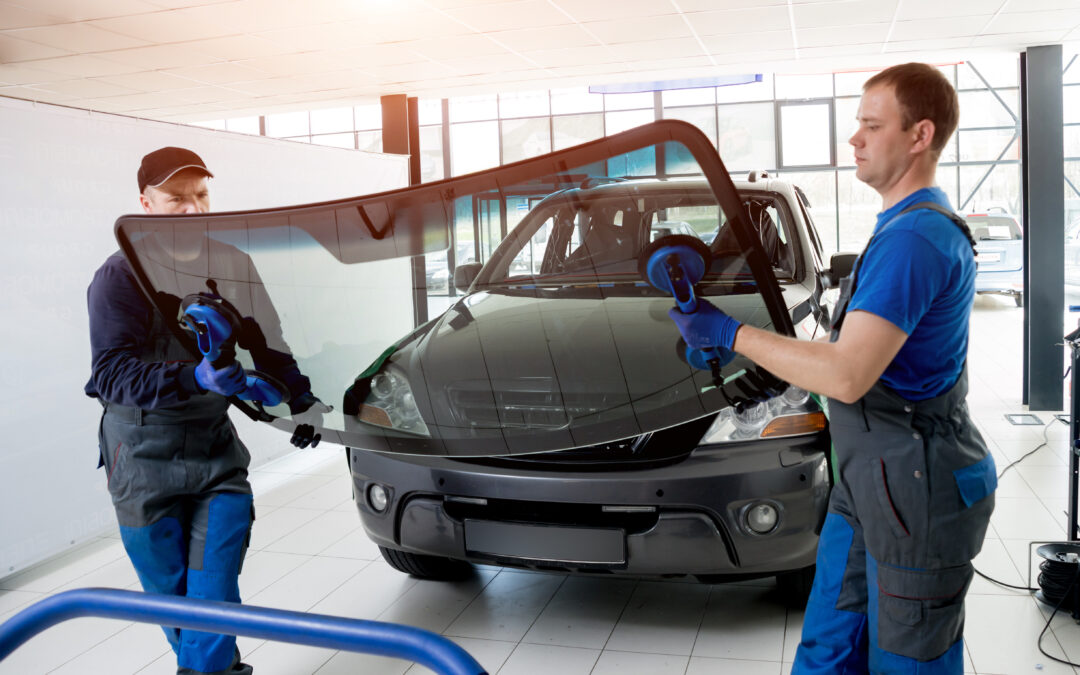
You finally get that cracked windshield replaced, step back, and think, “Looks great. Job done.” For a lot of vehicles, that glass is not just a window, it is part of the safety system. The camera near the top of your windshield feeds lane assist and collision warning features, and it was engineered around very specific glass. Swap that out for an aftermarket windshield vs OEM glass, and suddenly your car’s “eyes” are looking through a different lens, even if everything appears flawless at first glance. That quiet difference is where problems can start.
Why Your Windshield Is Part Of The Safety System
On modern cars, the windshield is more than a barrier against wind and rain. It is the surface your forward-facing camera looks through every second you drive. Lane assist, lane departure warning, collision warning, and sometimes automatic high beams all depend on a crisp, predictable view. The glass is basically a large lens between that camera and the road.
OEM glass is designed with precise thickness, curvature, tint, and optical clarity so engineers can test and tune these features under known conditions. When lane assist tracks paint on the freeway or collision warning spots a car in front of you, it is doing that through a carefully chosen “window.” When you introduce an aftermarket windshield vs OEM glass, even small changes in how light passes through can change what that camera sees.
How Different Glass Changes Camera Vision
To your eyes, a good aftermarket windshield vs OEM glass may look identical. The crack is gone, the view feels clean, and you do not notice any distortion while driving. The camera, however, is not as forgiving as a human brain. It relies on tiny differences in contrast, sharpness, and alignment to figure out where lanes and vehicles are.
If the glass bends light a little differently, changes how bright or dark certain areas appear, or distorts edges near the top of the windshield, the camera’s picture changes in subtle ways. Lane lines might look closer or farther away than they really are. Road markings might fade under certain lighting. Cars ahead might be harder to track at the edges of the frame. When you compare an aftermarket windshield vs OEM glass in this context, you see that the camera’s “world” is no longer exactly the same.
What That Means For Lane Assist And Collision Warning
Lane assist and collision warning systems are only as good as the information they receive. When an aftermarket windshield vs OEM glass changes the camera view, the software has to make decisions based on slightly distorted input. In real life, this can show up as lane assist activating late, failing to guide you back as confidently, or missing certain lane lines altogether. Collision warning may hesitate to alert you or may give more false alarms.
Some systems respond by becoming cautious. They may log internal fault codes, reduce their sensitivity, or, in some cases, quietly disable themselves if they think the data is unreliable. From the driver’s seat, the car still starts and drives, but those features might not step in when you expect them to. That is the real risk behind choosing an aftermarket windshield vs OEM glass: the safety net you paid for can start to fray without an obvious sign.
The Role Of Calibration After Windshield Replacement
Even with the right OEM glass, the camera does not simply “figure it out” once a new windshield is in place. Its position relative to the road has changed, sometimes by only a few millimeters, and that is enough to affect angles and perceived distances. Calibration is how the car’s brain learns its new setup. Static calibration in the shop uses special targets so the system can reset its reference points. Dynamic calibration on the road lets it fine tune those settings under real driving conditions.
If you install an aftermarket windshield vs OEM glass and skip calibration, you double the problem: the window is different and the camera has not been retaught. In that situation, lane assist and collision warning are guessing, which is not what you want when those features are supposed to help avoid accidents. Proper calibration paired with OEM glass gives your safety systems the best chance to work as designed.
Why Pre And Post Scans Matter When Glass Is Involved
Modern collision repair is as much about talking to your car’s computers as it is about replacing parts. Pre scans before windshield work let technicians see what the car’s modules have recorded so far. If they already see codes related to the camera or ADAS features, those need attention during the repair. When you compare estimates or repair plans, entries for scanning tell you the shop plans to listen to what your car has been saying.
Post scans after installing an aftermarket windshield vs OEM glass and completing calibration confirm whether the camera and related systems are genuinely satisfied. If the modules still report trouble, the shop knows there is more work to do. Without these scans, everyone is relying on outward appearance and faith. With them, there is proof about whether the safety systems have come back to full strength or if they are still struggling.
Cost Myths About Aftermarket Windshields Vs OEM Glass
It is easy to see an aftermarket windshield vs OEM glass as a simple cost decision. The aftermarket quote is lower, the crack disappears, and the car looks refreshed. The long-term costs are rarely explained at that moment. If your lane assist becomes unreliable or your collision warning fails to respond in a critical moment, the “savings” on glass suddenly feel very different.
There is also the cost in extra diagnostics and repeat work. When safety features act strangely after a cheap glass swap, someone has to trace the problem back, rescan the car, recalibrate, and sometimes replace the windshield again with OEM glass. That means more time without your car and more money spent overall. In many cases, paying once for OEM glass, calibration, and proper scans is far less frustrating than paying less up front and more later.
OEM Glass And The Anti-Collision System
The anti-collision system in your car depends on multiple senses working together: cameras, radar, ultrasonic sensors, and sometimes lidar. The windshield plays a central role in what the forward-facing camera “sees.” When you choose OEM glass, you are choosing the environment those engineers tested and tuned against. The system can interpret what it sees more confidently and react in ways that match the original safety goals.
With an aftermarket windshield vs OEM glass, that environment is altered. Radar and other sensors may still work well, but the camera component of your anti-collision system is seeing through different glass. In a split-second emergency, where lane assist and collision warning need to act, any hesitation or misread caused by that change can put the driver and occupants in harm’s way. That is why many careful shops treat OEM glass and proper calibration as core parts of protecting you, not as nice-to-have features.
FAQs About Aftermarket Windshields Vs OEM Glass
1. If an aftermarket windshield looks perfect, can it still affect my lane assist?
Yes. Even when an aftermarket windshield vs OEM glass looks identical to you, it can bend or filter light differently at the top of the glass where the camera lives. Lane assist relies on subtle differences in contrast and alignment, and those changes can cause the system to misread lane markings or react later than it should. The visual finish is only part of the story; the way the camera sees through the glass is what really matters.
2. Do I always need OEM glass if my car has collision warning?
If your collision warning system uses a forward-facing camera that looks through the windshield, OEM glass is strongly recommended. That camera was calibrated and tested with factory glass that has specific optical properties. An aftermarket windshield vs OEM glass can alter the view enough to confuse the system or make calibration less accurate, which can reduce your collision warning system’s reliability during sudden braking or tight traffic situations.
3. Why is calibration necessary even when I do choose OEM glass?
When a windshield is replaced, the camera’s position changes slightly, no matter how carefully the glass is installed. Calibration teaches the system where the road, lane lines, and horizon are relative to the new setup. Even with OEM glass, skipping calibration leaves the camera working with old assumptions. Combined with the subtle shift in position, that can cause misalignment in how lane assist and collision warning interpret what they see.
4. How do pre and post scans relate to my windshield replacement?
Pre scans check what your car’s computers recorded about the camera and ADAS systems before the glass work begins, which helps identify any existing issues. Post scans confirm how the modules feel after the new windshield and calibration are in place. When your repair plan, or estimate, includes both scans, it shows that the shop plans to verify your safety systems electronically, not just assume the new glass solved everything.
5. What should I ask a shop that recommends an aftermarket windshield for my high-tech car?
You can ask a few direct questions: “How will this aftermarket windshield vs OEM glass affect my lane assist and collision warning?”, “Will you recalibrate the camera afterward?”, and “Will you perform pre and post scans to check my ADAS systems?” Listen for clear answers that connect those steps to your safety. If the shop dismisses your concerns or says calibration and scans are unnecessary, that is a strong hint to seek a second opinion before agreeing to the work.
How CA Collision Handles Windshields On High-Tech Vehicles
At CA Collision, we look at windshields on modern vehicles as safety equipment, not cosmetic upgrades. When a car with lane assist or collision warning needs glass work, we talk openly about the difference between an aftermarket windshield vs OEM glass. We explain how the camera and ADAS features depend on that glass, and we recommend OEM options when safety systems are involved. We also build pre and post scans and required calibrations into the repair plan so the car’s electronics can verify that everything is working correctly again.
If you would like to see how this attention to detail shows up in the rest of our work, you can explore our collision repair services, look through the before and after gallery, and read real customer testimonials about their experience. When you are ready to talk about your own windshield or safety tech, you can reach out through our contact page or call CA Collision at 925-484-0111 to go over your options in plain language.