A curb strike or a light collision can leave your car looking fine while something important has changed underneath. Wheel alignment after a collision affects more than tire wear when your vehicle has lane keep assist. It can also change how the car understands where “straight ahead” is supposed to be.
Lane keep assist depends on cameras, steering data, and wheel position information to guide the vehicle correctly. When those pieces stop agreeing with each other, the system can give odd warnings or feel less steady. That is why a proper repair includes checking the alignment, scanning the vehicle, and handling any needed calibration.
Why Wheel Alignment After A Collision Matters
A wheel can take a hard hit from a curb, a pothole, or another vehicle without leaving obvious body damage. The force may affect suspension parts, steering components, or the angles that keep your vehicle tracking straight. Your car might still move down the road, but it may pull, drift, or wear out tires faster than expected.
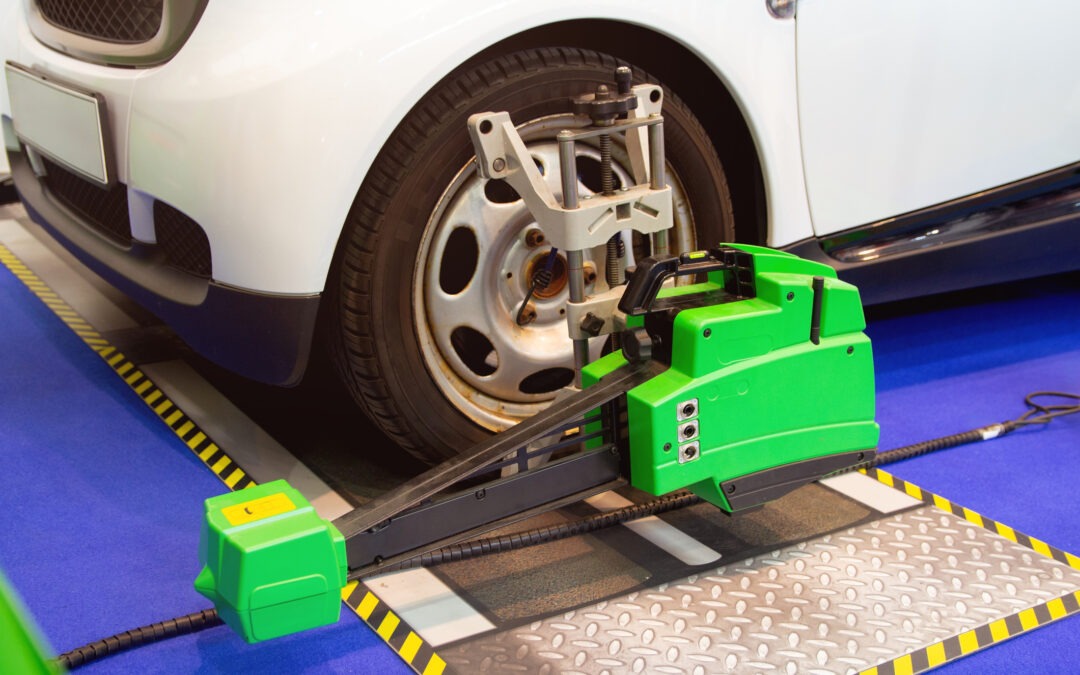
Wheel alignment after a collision brings those angles back within factory specifications. The process adjusts how the tires point and how the vehicle tracks down the road. On older vehicles, that repair was mainly about handling and tire life.
Modern vehicles add another layer to the story. Lane keep assist uses a camera to watch lane lines while the car’s computer monitors steering position. If the wheels and steering angle do not match the vehicle’s true direction, the system can lose its reference point. Manufacturers may require or recommend alignment before certain ADAS calibrations because the vehicle’s thrust line must be straight before sensors are aimed to it.
How Lane Keep Assist Uses Steering Data
Lane keep assist does not operate from the windshield camera alone. The system also relies on steering angle information to understand where the front wheels point as you travel. A steering angle sensor gives the computer a reference for the steering wheel and wheel position.
After wheel alignment after a collision, that reference may need to be checked or reset. A sensor can retain old zero-point data even after the wheels are returned to the correct alignment. That creates a mismatch where the vehicle travels straight, but the computer believes the wheels are slightly turned.
This may lead to strange lane keep assist behavior. The system could issue warnings on familiar roads, reduce steering support, or feel off when it attempts a correction. A technician can use a scan tool to zero the steering angle sensor once the wheels are pointed straight ahead, following the manufacturer procedure for that vehicle.
A Curb Hit Can Create Hidden Trouble
Picture a driver leaving a parking lot and clipping a curb with the front wheel. There is no crushed bumper, no shattered glass, and no obvious reason to think about collision repair. A few days later, the steering wheel sits slightly crooked while driving straight, and lane keep assist starts behaving differently on the freeway.
That scenario is more common than people think. The impact may shift the alignment enough to affect steering information, even if the tire holds air and the vehicle remains drivable. Wheel alignment after a collision helps correct the physical issue, but it may not be the final step for a high-tech vehicle.
The car’s safety systems need to know that the vehicle’s geometry is correct again. If the steering angle sensor needs a reset or the lane camera needs calibration, those steps should follow the alignment. It is similar to straightening a picture frame, then making sure the level agrees before hanging it back on the wall.
Why Pre-Repair Scans Matter
A pre-repair scan gives us a record of what the vehicle’s computers saw after the impact. It can uncover stored trouble codes related to steering angle, electronic stability control, lane assist, or other connected systems. Not every issue appears as a dashboard warning, so a scan can reveal problems that would otherwise stay hidden.
Wheel alignment after a collision should start with the whole vehicle in mind. We review scan results, inspect the affected area, and look at manufacturer repair guidance before deciding what the vehicle needs. That approach keeps the repair from becoming a game of chasing symptoms after the fact.
A pre-scan also helps separate collision-related faults from older issues. If the system shows a code before work starts, there is a documented starting point. That makes the repair plan more accurate and helps everyone understand why alignment, calibration, or additional inspection is needed.
The Importance Of A Post-Repair Scan
After alignment, component repairs, and any required calibration, a post-repair scan gives the vehicle a final checkup. It confirms that related modules have no unresolved fault codes and that the systems accepted the repair. This is the electronic proof that the job addressed more than visible damage.
For wheel alignment after a collision, the post-scan can confirm that steering angle values and lane assist systems are operating as intended. If the vehicle still reports an issue, we know there is more work to do before returning it to the driver. Skipping that step leaves too much to assumption.
A post-scan also supports the calibration records that high-tech vehicles need. It helps show that the camera, steering sensor, and related safety systems were checked after the vehicle was brought back into alignment. That little bit of extra care can make a big difference when you rely on lane keep assist during a long drive.
When Calibration May Be Needed
Not every alignment leads to the same repair steps. The exact requirements depend on the make, model, impact area, and manufacturer procedures. Still, wheel alignment after a collision often raises an important question: do any driver-assistance systems need calibration after the vehicle’s geometry changed?
A vehicle may need a steering angle sensor reset after alignment. Some models also need static calibration in the shop using special targets. Others require dynamic calibration, where the vehicle is driven under specified conditions while the system relearns lane lines and roadway cues.
The order matters. Many automakers require or recommend a four-wheel alignment before ADAS calibration, because sensors need a correctly aligned vehicle as their reference point. If calibration happens before the alignment is corrected, the system could be set to inaccurate geometry. It is a bit like using a bent ruler to measure a straight board.
OEM Parts Support Accurate Repairs
If the collision damaged suspension, steering, or sensor-related components, original manufacturer parts can play an important role. OEM parts match the fit, dimensions, and performance specifications that the vehicle’s safety systems were designed around. That precision supports proper alignment and calibration after repairs.
Aftermarket steering or suspension parts may fit, but small variations can affect vehicle geometry or sensor mounting. The same concern applies when a bumper, camera bracket, or windshield is involved. Those parts collaborate with cameras and sensors that support the anti-collision system.
OEM glass is especially important when the lane assist camera looks through the windshield. An aftermarket windshield may look fine from the driver’s seat, yet its optical properties can affect what the camera sees. If the system cannot read lane lines reliably, the driver and occupants could be put in harm’s way when assistance is needed most.
Signs You Should Have It Checked
You do not need to be a technician to notice when something feels wrong. If you experienced a curb strike or collision, pay attention to changes in handling and driver-assistance features. Wheel alignment after a collision may be needed when the steering wheel is no longer centered or the vehicle pulls toward one side.
You should also take lane keep assist seriously if it behaves differently after the incident. A warning message, inconsistent steering corrections, or a feature that shuts itself off may point to a system that needs inspection. Those alerts are not always dramatic, but they deserve attention.
Here are a few common signs that call for a closer look:
- The steering wheel sits crooked while driving on a straight road
- The vehicle pulls left or right after an impact
- Tires begin wearing unevenly after a curb strike
- Lane keep assist gives unexpected warnings or stops engaging
- A steering, stability control, or ADAS warning appears on the dash
How We Approach High-Tech Alignment Repairs
At CA Collision, we look beyond visible body damage after a curb strike or collision. When wheel alignment after a collision is part of the repair, we consider how suspension angles, steering data, and lane keep assist work together. We perform pre- and post-repair scans as appropriate, then follow manufacturer procedures for alignment and calibration needs.
We also take OEM parts seriously in areas that affect safety technology. The proper component can help restore the vehicle’s original geometry and give its sensors the hardware they expect. This matters for steering and suspension repairs, as well as camera-related work near bumpers or windshields.
You can learn more about our collision repair services, view examples in our before and after gallery, and read recent customer testimonials from drivers we have helped.
FAQs
1. Can a minor curb strike affect lane keep assist?
Yes, it can. A curb strike can change wheel alignment or affect steering and suspension parts without leaving visible body damage. Lane keep assist depends on accurate steering and camera data, so a small shift can cause the system to behave differently.
2. Why does wheel alignment matter for lane keep assist?
Wheel alignment sets the direction the vehicle travels when the steering wheel is centered. Lane keep assist and related safety systems use that information as part of their reference point. If the car is out of alignment, the system may not interpret its path correctly.
3. Will my dashboard always warn me about an alignment problem?
No, not always. A vehicle may pull, wear tires unevenly, or have changed lane assist behavior without showing a warning light. A professional inspection and scan can uncover hidden issues that the dashboard does not announce.
4. What is a steering angle sensor reset?
A steering angle sensor reset tells the vehicle’s computer where the straight-ahead steering position is after alignment or repair work. The process often uses a scan tool with the wheels pointed straight. It helps the computer match steering input with the vehicle’s actual direction.
5. Do I need calibration after every wheel alignment?
The answer depends on your vehicle and the work performed. Some manufacturers require or recommend ADAS calibration after alignment, particularly when lane keep assist, steering sensors, or related components are affected. We review vehicle-specific procedures to determine the right next step.
6. Why do you recommend OEM parts for steering and sensor-related repairs?
OEM parts are designed to meet the vehicle manufacturer’s dimensions and performance standards. That accuracy supports correct alignment, sensor operation, and calibration. Parts that vary from those specifications can make it harder for safety systems to function as designed.
Get Your Vehicle Back On Track
A crooked steering wheel or odd lane assist alert after an impact is worth checking before it becomes a bigger issue. Call CA Collision at 925-484-0111 or contact our team to schedule an inspection and get your vehicle pointed in the right direction.