
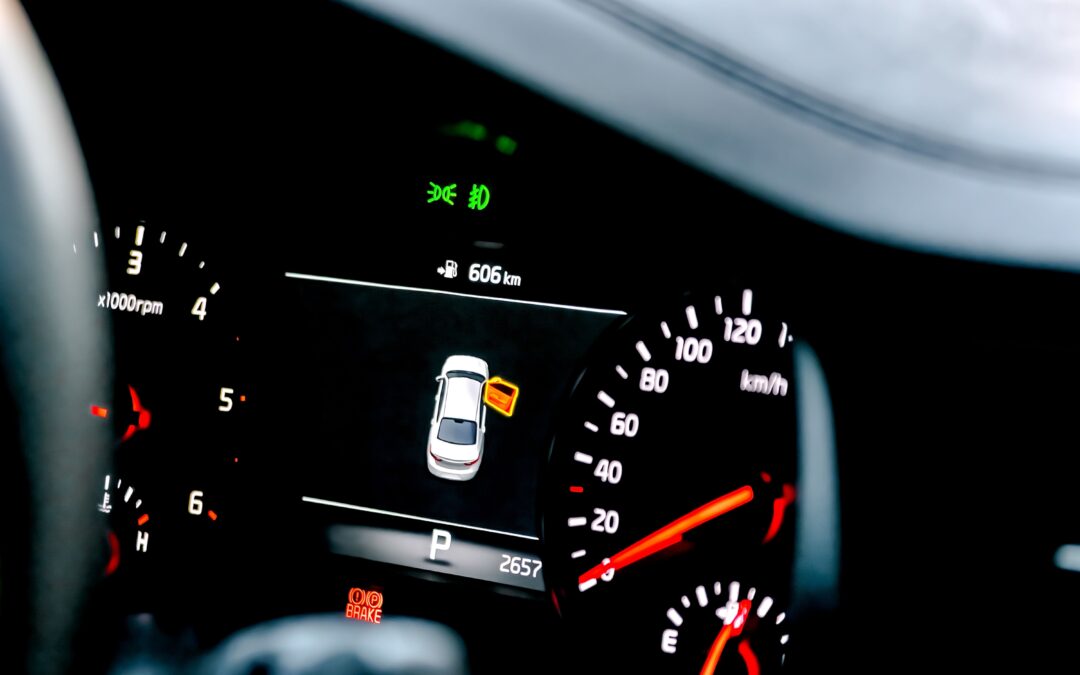
Most drivers picture twisted metal and deployed airbags when they think about serious damage, but modern safety systems can be knocked off balance long before things look that dramatic. A simple tap in a parking lot or a low-speed bump at a stoplight can shift sensors, nudge cameras, or confuse the computers that quietly support you on every drive. On the surface, your bumper might only show a scuff, yet underneath, the technology that helps you avoid trouble could already be off its game. That gap between what you see and what your car feels is exactly why small collisions deserve more attention than a shrug.
How Safety Systems Really Work Behind The Scenes
Today’s safety systems are more than seat belts and airbags. They include advanced driver assistance features that watch traffic, read lane markings, and keep track of vehicles beside and behind you. Cameras mounted near the windshield, radar units behind emblems or bumpers, and sensors tucked into mirrors and quarter panels all feed information into the car’s control modules. Those modules constantly process what they see and decide when to warn you or step in.
Because of that, safety systems depend on precise alignment and clean communication. If a radar sensor is tilted a bit or a camera moves slightly in its bracket, the data reaching those computers is no longer accurate. The system might still function, but it will not react the way it did before. In some cases, it quietly shuts down parts of its operation to avoid making bad decisions, which sounds responsible until you realize it leaves you without backup when you expect it most.
Why Low Speed Bumps Matter More Than They Look
It is easy to downplay a parking lot bump or a low-speed rear end tap. Maybe you exchange insurance info, glance at the bumper, and think, “That is not worth a big repair.” The problem is that safety systems do not care about how dramatic the impact looks; they care about where the energy traveled. Even at slow speeds, a nudge at the right spot can move a sensor bracket, shift a camera mount, or stress wiring behind a panel.
This is especially true in areas where manufacturers hide ADAS components. That clean looking bumper might be sitting in front of a radar module or ultrasonic sensors. The mirror that folded in during a sideswipe might house a blind spot sensor. When we talk about safety systems, we are really talking about a network of delicate parts trying to work together, and minor hits can disrupt that network without leaving a giant dent to prove it.
Hidden Damage To ADAS After Parking Lot Bumps
Parking lots are where a lot of sneaky safety systems damage happens. A quick bump while backing into a space, tapping a concrete post, or brushing a shopping cart can affect equipment behind the fascia. You might see nothing more than a scuff or a slight misalignment in the panel, then carry on with your day. Meanwhile, the car’s electronics may have already logged fault codes or changed how certain features behave.
Sometimes drivers notice that their parking sensors chirp at strange times or stay quiet in situations where they used to speak up. Other times, a forward collision warning lights up randomly, then seems to vanish for weeks. These odd behaviors can be early signs that safety systems are not reading the environment correctly anymore. Without proper scanning, they remain mysteries that most people chalk up to “quirky electronics” when there is a real cause that can be found and fixed.
Why The Dash Might Stay Quiet When Codes Are Stored
One of the trickiest things about modern safety systems is that the dashboard does not always tell the whole story. You expect a big warning light when something important is wrong, and sometimes that happens. In many cases, though, the system stores trouble codes in the background without lighting up the dash. The vehicle’s logic might decide to limit or disable a feature quietly rather than bother you, especially if it is not sure whether the issue is permanent.
From a driver’s point of view, that silence feels like everything is fine. The car starts, drives, and stops, and the cluster looks normal. Under the surface, the control modules may be sitting on a pile of stored codes that say safety systems are not operating at full strength. This is why relying only on warning lights can give a false sense of security after even a small collision.
How Pre Repair Scans Reveal The Truth
A pre repair scan acts like an honest conversation with your vehicle before any work begins. Technicians plug into the car’s diagnostic port and communicate with the different control modules that run safety systems, engine management, airbags, and more. The scanner pulls active and stored codes so everyone can see exactly what changed after the impact, even if the dash never said a word.
For a seemingly minor bump, this can be eye opening. A car that looks fine might show codes in its camera system, radar unit, or steering and brake modules. Pre repair scanning turns guesswork into data. It tells us which safety systems need attention, where to look for alignment or calibration issues, and what should be rechecked once repairs are complete. It also means you get a record of what your car was feeling before anything is taken apart.
The Role Of OEM Parts In Restoring Safety Systems
Once those issues are identified, the next step is fixing them in a way that respects how the vehicle was originally built. OEM parts matter a lot here. Safety systems were designed and tested around specific bumpers, brackets, glass, and mounting hardware. The thickness of a bumper cover, the shape of an emblem, and the optical quality of a windshield all affect how sensors and cameras see the world.
When repairs use parts that do not match those specs, even by a little, safety systems can struggle. Radar signals might bounce differently, cameras might see distorted lane lines, or sensors might sit at a slightly wrong angle. With OEM parts, technicians can bring the vehicle back into the environment it expects. That gives calibrations and scans a solid foundation and helps safety systems perform the way the engineers intended instead of “good enough for now.”
Why OEM Glass Matters For Camera Based Safety Systems
Windshields deserve their own spotlight in this conversation. Many modern safety systems rely on cameras mounted near the top of the windshield to watch lane markings, traffic, and road signs. OEM glass is built with correct curvature, thickness, and clarity so those cameras receive a consistent, accurate view. When glass with different characteristics goes in, the image that reaches the camera changes subtly.
That change can be enough to confuse features like lane keeping and automatic emergency braking. Even if the camera is recalibrated, the system is working harder to interpret a view it was not designed around. Using OEM glass helps keep the relationship between the camera and the road as close as possible to the original, which means safety systems can do their job without compromise.
Post Repair Scans And Calibrations As Your Safety Net
After parts are replaced and panels are straightened, post repair scans and calibrations step in as your safety net. Another scan checks for codes that remain or appear after the work, and calibrations reset sensors and cameras so they know exactly where they sit on the repaired vehicle. This is where everything comes together: the visual repair, the electronic health, and the alignment of safety systems.
Skipping these steps would be like fixing a pair of glasses but never checking if the lenses match the prescription. The car may look great and drive smoothly, yet safety systems might still be out of sync. When post repair scans and calibrations are built into the process, you leave with a vehicle that not only appears restored but also behaves as a whole, with safety features ready to help when you need them.
How Proper Scanning And OEM Parts Restore Your Safety Net
Putting it all together, proper scanning and OEM parts give safety systems a real path back to full strength. Pre repair scans show where the damage is, even when it is hidden. OEM parts and glass recreate the environment those systems were built for. Post repair scans and calibrations confirm that the computers are happy and that cameras and sensors are seeing the world correctly again.
If you want to see how a quality focused process looks from bumper to bumper, you can explore the shop’s collision repair services along with their before and after gallery to get a better sense of the work they do. Customers who care about safety systems and the full repair process often share their experiences in the testimonial section as well, which can be helpful if you are comparing options.
Your Next Step To Protect Your Safety Systems
Safety systems protect you long before a crash, not only in the moment it happens. When a low-speed bump throws sensors or cameras out of alignment, those systems can quietly stop helping you even though your vehicle looks fine. Pre and post scans, along with the right OEM parts and glass, are what bring that hidden layer of protection back to life after a “small” accident.
If your vehicle has been in a low-speed collision, it is worth more than a quick visual check and a shrug. Reach out to CA Collision at 925-484-0111 so we can scan your car, talk through what your safety systems are telling us, and guide you through repairs that respect both the visible damage and the hidden technology. You can also get in touch through the convenient online contact form if that fits your day better.